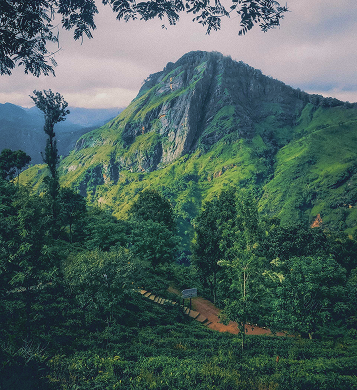
Far from the coastal resorts and the well-trodden tea-country trail, in the dry eastern foothills of Uva Province, lies a forest that few travellers ever hear about. Nilgala is a sweep of open savannah woodland, scattered rocky outcrops and slow, tea-coloured streams that drain toward the Gal Oya basin. It is wild in the truest sense: no queues of jeeps, no souvenir stalls — just the drone of cicadas and, now and then, the crack of a branch somewhere deep in the scrub.
The landscape feels almost African at first glance. Rolling grasslands, known locally as talawa, open between stands of hardy dry-zone trees, and in the low light of early morning the whole valley glows gold.
A forest that heals
For generations, Nilgala has been valued as much for what grows here as for its beauty. Villagers on the forest fringe still speak of it as a natural pharmacy, and many of the fruits, barks and roots used in traditional Ayurvedic preparations grow wild among the grasslands — among them aralu, bulu and nelli, the three fruits that together form the classic tonic known as triphala.
Walking with a local guide turns the forest into a living classroom. A twisted vine becomes a remedy for fever; a smooth grey bark, a balm for aching joints. It is knowledge passed down by word of mouth, and hearing it first-hand is one of the quiet privileges of a visit.
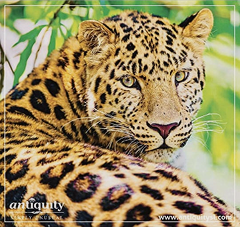
Walk quietly and Nilgala reveals itself slowly — a flash of a paradise flycatcher, the tracks of a leopard pressed into the soft riverbank.
— Notes from the field
Life in the wild woodland
Nilgala’s position beside the Gal Oya wilderness means wildlife moves freely across the region. Herds of elephants follow ancient routes through the valleys, while leopards, sloth bears, spotted deer and wild boar keep to the shadows. Birdlife is abundant: peafowl strut across the clearings, hornbills call from the canopy and raptors circle the rocky ridges on the morning thermals.
The best encounters come to those who are patient. Rock pools along the streams make natural resting points, and a pause in the shade by the water often brings the forest to you.
Exploring the Antiquity way
We pair guests with experienced naturalists and trackers from the surrounding villages, setting out at first light when the air is cool and the animals most active. Walks are unhurried, with time to swim in clear pools, share a picnic breakfast on a granite outcrop and learn about the forest’s plants from those who know them best.
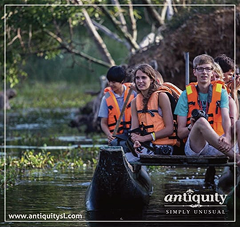
Nilgala sits comfortably alongside a boat safari on the Senanayake Samudra reservoir in Gal Oya National Park, where elephants are sometimes seen swimming between islands — a rare sight anywhere in the world.
Good to know
- Where
- Monaragala District, Uva Province — on the edge of the Gal Oya wilderness
- Best time
- The drier months (roughly May to September) are ideal for walking
- Getting there
- Around three hours by road from Ella; a full day from Colombo
- Pair it with
- A Gal Oya boat safari, Ella and the hill country